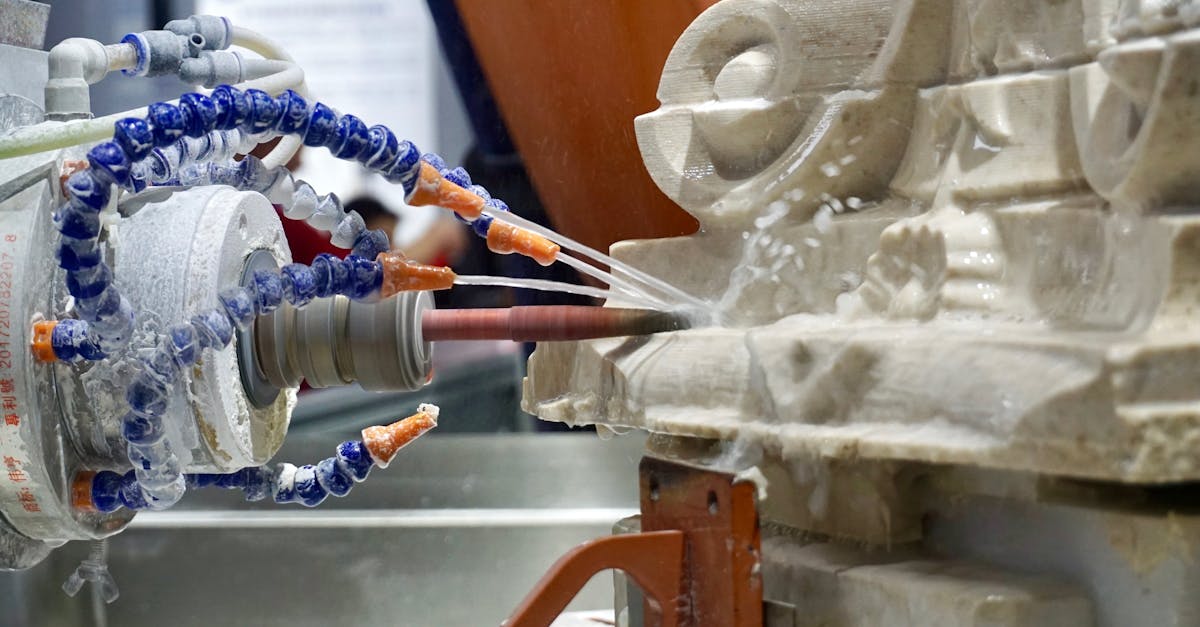
CNC machining services in China offer a powerful solution for businesses worldwide looking for precision, high output, and cost efficiency. Companies evaluating CNC Machining Services China options—whether to invest in their own equipment or outsource to established providers—increasingly find that partnering with Chinese manufacturers delivers advanced capabilities without significant capital investment. With advanced facilities and a mature industrial ecosystem, choosing a Chinese partner for CNC machining can be a strategic move for companies across sectors such as automotive, aerospace, and electronics. This guide breaks down the essentials, from understanding core processes to selecting the right supplier and ensuring quality at every step.
Key Takeaways
- CNC machining services in China offer high precision, scalability, and cost-efficiency for global industries such as automotive, aerospace, and electronics.
- Chinese CNC machining providers use cutting-edge technology, advanced multi-axis equipment, and smart manufacturing techniques for consistent quality and fast turnaround.
- Choosing a reliable CNC machining partner in China requires checking references, industry certifications, and transparency in communication and quality control.
- A wide range of CNC machining services, from milling and turning to custom micromachining and finishing, allows for one-stop solutions tailored to various production needs.
- Effective quality management, clear documentation, and proactive communication are essential to successful outcomes when working with CNC machining services in China.
Understanding CNC Machining: An Overview
CNC (Computer Numerical Control) machining combines digital design with automated machines to create highly accurate parts. Unlike manual methods, CNC machining uses programmed instructions to control tools like mills, lathes, and grinders. This allows for repeatable, precise removal of material, usually metals or plastics, from a solid block, resulting in complex shapes.
Key processes include:
- Milling: Rotating tools cut away material along multiple axes.
- Turning (lathe): The workpiece rotates while stationary tools shape the exterior.
- Drilling and grinding: For holes and fine tolerances.
Modern CNC machines often operate with 3 to 5 axes, supporting intricate geometries and tight tolerances, sometimes as precise as ±0.005 mm. This blend of automation and accuracy makes CNC machining the backbone of industries demanding consistency in both prototype and production runs.
Why Choose CNC Machining Services in China?
China has gained a reputation as the world’s factory not by chance, but through decades of investment in infrastructure, talent, and technology. Chinese CNC machining services are chosen by companies across continents for several reasons:
- Scale and flexibility: Factories adapt quickly to project size changes, from single prototypes to high-volume runs.
- Established supply chains: Local access to materials and logistics means faster lead times and cost savings.
- Focus on smart manufacturing: Many Chinese workshops use advanced software integration, robotics, and real-time data tracking. This supports not only productivity but also quality and transparency.
Whether you’re a startup looking for rapid prototyping or a multinational scaling production, the manufacturing environment in China offers a competitive edge, if you choose the right partner.
Key Advantages of CNC Machining in China
Working with CNC machining services in China brings distinct advantages:
- Cost-effectiveness: Lower labor costs combined with high-volume economies allow for competitive pricing. Many facilities are part of interconnected supply hubs, reducing transportation and sourcing expenses.
- High precision, consistent quality: It’s not just about quantity. Shops routinely achieve tolerances down to ±0.005 mm using multi-axis machines from top global brands (Mazak, DMG Mori, and more).
- Speed and adaptability: Ready access to raw materials (often available locally), flexible scheduling, and advanced digital controls translate to shorter project cycles.
- Comprehensive capabilities: Major factories offer in-house finishing, assembly, and complementary processes, like 3D printing or sheet metal fabrication, streamlining complex projects.
The result? Businesses around the globe, from automotive to medical device makers, trust Chinese suppliers for both standard and innovative custom parts.
Types of CNC Machining Services Available
CNC machining in China covers an extensive range of processes. Key categories include:
- CNC Milling (3, 4, and 5-axis): Enables intricate 3D shapes and critical tolerances.
- Turning and lathe work: Suited for cylindrical or round components, both in metals and plastics.
- Grinding and routing: Essential for achieving superfine finishes or cutting complex contours.
- Custom micromachining: Used in electronics, medical, and watchmaking sectors for ultra-small parts.
- Laser cutting: For ultra-precise sheet metal or thin-gauge materials.
Many providers supplement CNC with services like injection molding, die casting, and rapid prototyping, offering clients a one-stop-shop experience. For example, specialists like Yijin Hardware, based in Homestead, FL, but with international partnerships, combine CNC with sheet metal, die casting, and even 3D printing, aiming for a comprehensive solution across industries.
How to Select a Reliable CNC Machining Partner in China
Partner selection is arguably the most critical step in outsourcing CNC machining. Here’s a structured approach:
- Check experience and references: Seek out partners with a proven track record in your sector. Ask for references or case studies with international clients.
- Verify certifications: ISO 9001 for general quality, or ISO 13485 for medical devices, signal a serious commitment to standards.
- Assess technology and transparency: Ask about ERP systems for traceability, quality inspection protocols, and whether they use top-brand machines.
- Request samples and site visits: Physically review sample parts or tour facilities (many offer virtual tours).
- Mind the region: Focus on established industrial zones (like Shenzhen or Dongguan) for the widest technology and talent pools.
Companies like Yijin Hardware help bridge gaps with US-based support while managing vetted Chinese manufacturing networks. As Gavin Yi, CEO, notes, “Our goal is to safeguard quality and communication at every step.“ They provide clear contracts, sample validation, and end-to-end logistics, crucial for new entrants to the China supply chain.
Common Applications: From Prototypes to Production
CNC machining’s core appeal is versatility.
- Prototyping: Quick, precise iterations support R&D for automotive systems, aerospace components, or innovative consumer goods.
- Low- to medium-volume custom parts: Perfect for startups and established brands refining new product designs, with options to switch materials or geometries rapidly.
- Mass production: Factories in China handle automotive, aerospace, and medical production lines, ramping up to tens of thousands of units with consistent quality.
Businesses like Yijin Hardware serve a client base looking for everything from a single aerospace prototype to thousands of medical implant parts, leveraging global supply and local expertise to match each production stage.
Navigating Quality Control and Communication
Ensuring your parts turn out right every time starts with robust quality management and transparent communication.
- Quality inspection: Reputable suppliers use advanced metrology, CMM (coordinate measuring machines), laser scanning, and surface finish checks, to guarantee each component meets specification.
- Clear documentation and contracts: Include tolerances, IP protections, and language clauses in agreements. Use English as the working language or have expert translators manage correspondence.
- Third-party audits and site inspections: Many clients request independent engineers to verify batches before shipment.
- Continuous updates: Select suppliers, like those managed by Yijin Hardware, offer real-time photo/video updates to keep clients informed at every stage.
This focus on documentation and communication helps address challenges around time zones, translation, and intellectual property, ensuring smooth, predictable outcomes.
About Yijin Solution
Business: Yijin Solution
Spokesperson: Gavin Yi
Position: CEO
Phone: +1 626 263 5841
Email: [email protected]
Location: 760 NW 10th Ave, Homestead, FL 33030, USA
Website: http://yijinsolution.com/
Google Maps Link: https://maps.app.goo.gl/TbnqMpxoinnottN7A
Frequently Asked Questions about CNC Machining Services in China
What are the main benefits of using CNC machining services in China?
CNC machining services in China offer cost-effectiveness, high precision, and fast turnaround times. The advanced facilities, skilled workforce, and established supply chains provide flexibility from prototyping to mass production, making China a strategic choice for global businesses.
How do I choose a reliable CNC machining partner in China?
Select a CNC machining partner by checking their experience, client references, and certifications like ISO 9001. Assess their technology, quality control processes, and ability to communicate clearly. Site visits, sample validations, and focusing on established industrial hubs also increase reliability.
What types of CNC machining services are available in China?
Chinese providers offer milling (3, 4, 5-axis), turning, grinding, routing, micromachining, and laser cutting. Many supplement these with finishing, assembly, die casting, and rapid prototyping, enabling one-stop solutions for complex manufacturing needs.
Why is CNC machining preferred for both prototypes and production runs?
CNC machining delivers precision and repeatability, supporting rapid prototyping and consistent quality in production runs. The technology can quickly adapt to design changes, making it ideal for both research and mass manufacturing scenarios across various industries.
How does quality control work with CNC machining services in China?
Quality control involves advanced inspection methods such as CMM, laser scanning, and strict documentation. Reputable suppliers offer transparent reporting, robust contracts, and real-time project updates. Third-party audits and site inspections help ensure every part meets specification and client expectations.
Can CNC machining services in China handle custom and low-volume orders?
Yes, many CNC machining shops in China specialize in both custom projects and low-to-medium volume production. They offer flexibility in design, materials, and order quantity, supporting startups and established brands as they iterate or scale their product offerings.